
Côte de Beaune
The southern half of the Côte d'Or, from Ladoix-Serrigny to the Maranges: Chardonnay and Pinot Noir side by side
- Location
- Southern half of the Côte d'Or, from Ladoix-Serrigny to the Maranges
- Grapes
- Pinot Noir and Chardonnay; whites predominate between Meursault and Chassagne-Montrachet
- Grands Crus
- 8: seven white only, plus Corton, mostly red
- Share of the Burgundy vineyard
- About 12% of the area in production (Village, Premier Cru, and Grand Cru; 2021–2025 average)
- Hospices de Beaune auction
- Since 1859, usually on the third Sunday of November
- UNESCO World Heritage
- Since 2015, together with the Côte de Nuits

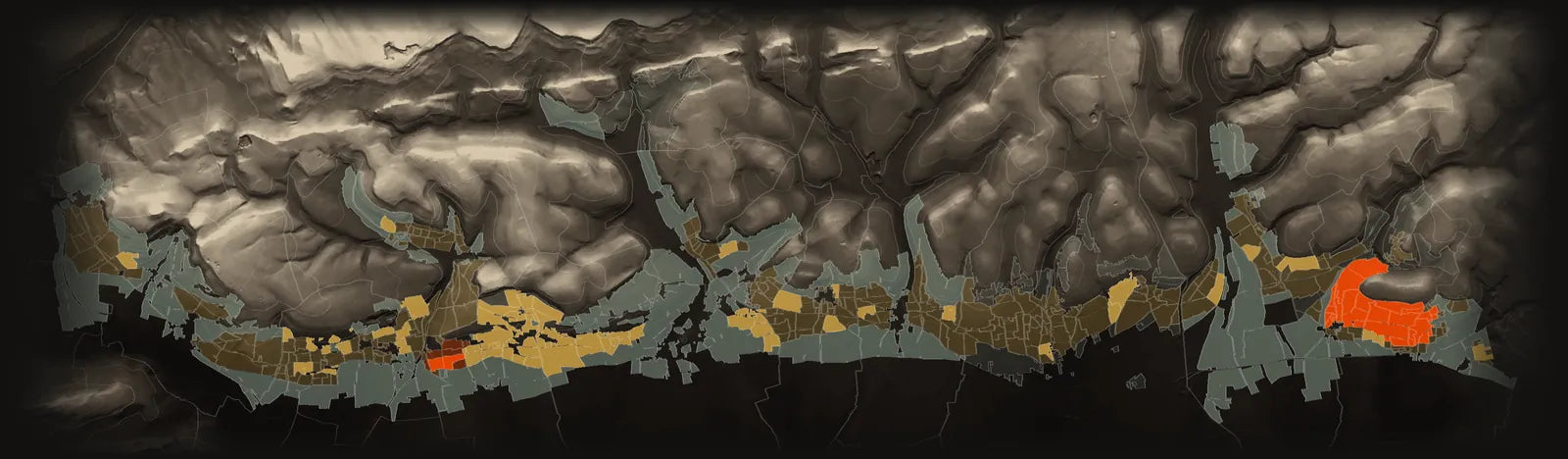
The Côte de Beaune is the southern half of the Côte d'Or. It begins at Ladoix-Serrigny, at the foot of the hill of Corton, and runs south to the Maranges, just over the departmental line in Saône-et-Loire. Facing the morning sun, the vineyard occupies a strip of hillside no more than a few hundred meters wide; compared with the Côte de Nuits, the relief is gentler and more varied. Farther west, on the plateau at about 400 meters, lie the vineyards of the Hautes Côtes de Beaune.
The grapes change from north to south as well. The hill of Corton gives the white Corton-Charlemagne and Corton, mostly red and the only Grand Cru in the area that produces red wine; around Beaune, Pommard, and Volnay, Pinot Noir dominates. From Meursault to Chassagne-Montrachet, Chardonnay prevails, and between Puligny and Chassagne lie the five white Grands Crus bearing the Montrachet name; farther south, in Santenay and the Maranges, reds take the lead again. In all, the area counts eight Grands Crus and some twenty Village appellations, many of them with climats classified as Premier Cru.
Once, all the wines of the Côte de Beaune traveled under the generic name “vin de Beaune.” Today labels deserve a careful read: “Côte de Beaune” is also the name of a small Village appellation, limited to a few high-lying vineyards in the commune of Beaune, while “Côte de Beaune-Villages” is reserved for red wines from one or more of the eligible communes. In the eighteenth century the merchant houses of Beaune came to control much of the market; the town preserves the Hôtel-Dieu, founded in 1443, and since 1859 has hosted the Hospices wine auction, usually held on the third Sunday of November. The available bottles are listed below.
Credits and sources. Photo: Benjamin Smith · CC BY-SA 4.0 · Wikimedia Commons. Map: IGN (RGE ALTI®, BD TOPO®), INAO · Licence Ouverte 2.0.


